Centrality of Zodiac Signs and Nakshatras in Vedic Astrology

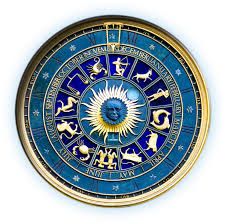
Initially the zodiac was separated into 12 fundamental rashi, to think about the impacts
of the planets set there. At that point the old diviners included another sub divisional
arrangement of separating the zodiac into 27 Nakshatras or star heavenly bodies. Each
nakshatra has a traverse of 13 degrees and 20 minutes. After that each nakshatra was
additionally subdivided into 4 Padas, or quarters, of 3 degrees and 20 minutes. Thus the
primary zodiac sign Aries, which has 30 degrees, contains the whole 4 padas (13:20′) of the
first star heavenly body Ashwini, the whole 4 padas (13:20′) of the second star group of
stars Bharani and the first pada (3:20′) of the third star heavenly body Krittika. So each
rasi contains add up to 9 padas. These nakshatras have a place with three primary
gatherings: Deva or awesome, Manusha or human and Rakshasa or Demonic. They have
distinctive decision gods, possessed by various planets and have unique characteristics.
Subsequently while considering the impacts of a planet put in Aries, it is additionally
examined in which nakshatra it is set and in which pada of that nakshatra it is set. This
arrangement of investigation exists just in Indian crystal gazing.
In the Vedic (Hindu) arrangement of Astrology, referred to in Sanskrit as Jyotish, the 27
groups of stars and not the 12 star-signs are the way to understanding heavenly effects on
our planet. These 27 groups of stars are known as the 27 Nakshatras, which are 300 to 400
light years from earth. In light of a man's moon Nakshatra at the season of birth, Jyotish
offers a most intense prescient method contrasted with different types of crystal gazing.
The expression "Nakshatra," when separated into its constituent parts: "naks" signifying
"sky" and "shetra" signifying "district", convert into "Sky Map." Another interpretation
is landed at utilizing an alternate dismemberment: "naksha" is "guide" and "tara" is
"star" thus Nakshatra is "Star Map." Both implications plainly demonstrate that according
to the antiquated Vedic (Indian) soothsayers the 27 Nakshatras (groups of stars) and not
the 12 zodiacal star-signs outline sky.
It was the Moon that antiquated individuals initially looked to for ascertaining time and
associating with the stars. 'Nakshatras' is the name given to the groups of stars or
manors of the Moon, as the Moon lives in every one of these heavenly bodies for multi day.
The arrangement of groups of stars is extremely old, going back over 5,000 years as they
were alluded to in the most seasoned Veda (Hindu's sacred writing). These lunar houses
show up in Chinese and Arabic soothsaying yet have not gotten much consideration in
Western or European crystal gazing. Every one of the 27 Nakshatras comprises of 13º and 20
minutes of the zodiac. Increasing this length by 27 breaks even with the whole zodiacal
belt of 360 degrees.
The Nakshatras are grouped in different courses, as per fundamental property, essential
inspiration (Kama - exotic wants; Artha - material wants; Dharma - living in light of
profound standards; Moksha - freedom from birth and passing), sex, rank, species et
cetera. They are especially uncovered by their managing divinities, administering planets
and their emblematic frame.
The Nakshatra and the indications of the zodiac both start from a similar point. The start
of the principal Nakshatra, or group of stars of Ashwini, the main Nakshatra, is the same
as that of the primary indication of Aries. Each sign contains the joined impact of the
Nakshatras falling with it. Contrasted with the signs, the Nakshatra or Nakshatras have a
more profound impact. The signs are just "a store, mass, or accumulation" of impacts as
their Sanskrit name proposes.
The planets are the enormous imaginative forces. Every planet emanates certain particular
powers. The planets have their effect on the zodiacal field. This specific hover separated
by the signs and Nakshatras is the negative or uninvolved field of impacts, while the
planets are the positive or dynamic fields. The signs and Nakshatras make the essential
condition, while the planets are the hastening powers.
Prakriti (the female innovative motivation) is the power that manages the general
foundation of the zodiac. Prakriti produces the essential conditions on which the seeds
sprinkled by Purusha (the male cognizance factor) fructify and develop. The Nakshatras and
indications of the zodiac are the detached innovative strength though the planets are the
inventive or producing powers. The planets are dynamic causes while the signs and
Nakshatras are the material layer of the activity. The Nakshatras and signs constitute the
level arm, while the planets speak to the vertical arm in the cross of infinite creation.
In Vedic soothsaying, the identity qualities are perused more through the birth star
(Nakshatra of the Moon) than by the Sun sign. Nakshatra places of planets are inspected in
the birth outline too. The utilization of Nakshatra is essential in Vedic soothsaying,
substantially more than with zodiac signs.
Indian soothsayers say that the Nakshatras speak to the homes which the our rewards for
all the hard work (our Karma) is exchanged and put away. The Nakshatras apportion the
products of Karma, the most elevated of which is the product of our love and
contemplation, our otherworldly work of life.
Vedic crystal gazing utilizes an arrangement of planetary periods called Dasha (Major
Period) of different planets in light of the Moon Nakshatra at the season of birth. Most
critical is Vimshottari Dasha, a 120-year-long cycle of planetary positions in light of
the birth Nakshatra, stars. The planetary times of Vedic crystal gazing give a simple and
complete framework for judging the impacts of planets all through out our lives. The
planetary periods are the most exact arrangement of how the planets convey their
belongings through time and distinctive phases of our lives. The real seven planets in
addition to two lunar hubs are appointed periods extending from 6 to 20 years.
With the assistance of this Dasha (Major Period framework) a Vedic crystal gazer can
anticipate future occasions precisely. Be that as it may, Western and other celestial
frameworks don't have prescient capacities as Vedic crystal gazing.


Comments
Post a Comment